

A recent publication by the Partnership for Student Success (PSS) at the Johns Hopkins University Everyone Graduates Center highlights several models for how high school students can be meaningfully involved in support roles that foster success for both those giving and receiving support. After all, peer influence is a powerful driver of student engagement and well-being.
Following the release of the brief, the PSS team set out to explore more deeply the interest level students expressed for serving in supportive roles to assist their peers, as well as what such roles might entail, and what would encourage participation. PSS also aimed to understand whether students would seek and use peer support, along with their motivations and concerns regarding such programs. By identifying what conditions make peer support both appealing and effective, schools can build more intentional systems that empower students to learn from, guide, and support one another in meaningful ways.
National Education Advocacy Summit
In partnership with TeenVoice, the Partnership for Student Success surveyed 500 teens ages 13–17 from across the United States. The survey, which included both multiple-choice and open-ended questions, offered valuable insight into students’ attitudes toward peer support roles—both as providers and recipients.
Overall, students expressed a strong interest in serving in peer support roles. Their motivations centered on three themes: helping others, building relationships, and developing their own skills. Many saw these roles as opportunities to foster community while gaining valuable experience in leadership, communication, and empathy.
Students also highlighted the importance of professional training for peer supporters. They want guidance from trained adults on communication skills, managing difficult situations, maintaining confidentiality, and building leadership capacity. Such preparation would help students feel more confident and competent in these roles.
In short, the findings suggest that students are eager to help one another when given structured, well-supported, and trustworthy systems for doing so.
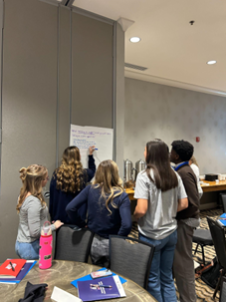
So, it was no surprise to us in October at NASSP’s National Education Advocacy Summit in Washington, D.C., that feedback from teen leaders in attendance reflected strong alignment with the TeenVoice survey findings. National Student Council (NSC) officers and representatives who attended the summit provided feedback on four key questions related to peer support: What would make them more comfortable using peer services, what would motivate them to serve in such roles, what training they would need, and how these supports might look in their schools or communities.
PSS welcomed the chance to spend a short but insightful hour with the student council leaders. In small group discussions, many emphasized the desire for professional growth—that programs offer the opportunity to develop skills, leadership acumen, and connections with a career field.
When envisioning what peer supports could look like, students described a range of possibilities—from mentoring programs for academic transitions to wellness ambassadors or “peer buddies” available during designated hours or periods of the school year. Their insights affirm that peer support systems thrive when designed with youth input and sustained with adult partnership.
Expanding Peer Supports in Schools
The findings from both the TeenVoice survey and NSC leaders highlight a clear opportunity for schools to intentionally cultivate peer support systems. Students are willing, capable, and motivated to help one another—if schools provide the structure, trust, and recognition needed to make these efforts meaningful.
Schools and districts can begin by creating formal pathways for students to engage in peer mentoring, tutoring, or wellness support. Providing training and ongoing support led by counselors, educators, or community professionals will lend credibility to these roles. Additionally, ensuring safe, confidential, and well-communicated processes will help address privacy concerns and increase comfort among students seeking support.
By investing in these initiatives, schools not only expand their capacity to meet students’ academic and emotional needs but also empower youth as leaders and change agents within their communities. As one teen reflected in the survey, “I believe both roles benefit: the student needing help will receive the help they need, and the helper will learn more by being with that person.”
The Partnership for Student Success supports a nationwide effort in local and state communities across the country to bring evidence-based and people-powered support to all K–12 students. It brings together experts and practitioners in education, national service, and youth development to support locally-driven implementation of tutoring, mentoring, student success coaching, postsecondary transition coaching, wraparound/integrated student supports, and other evidence-based practices that support children and youth.